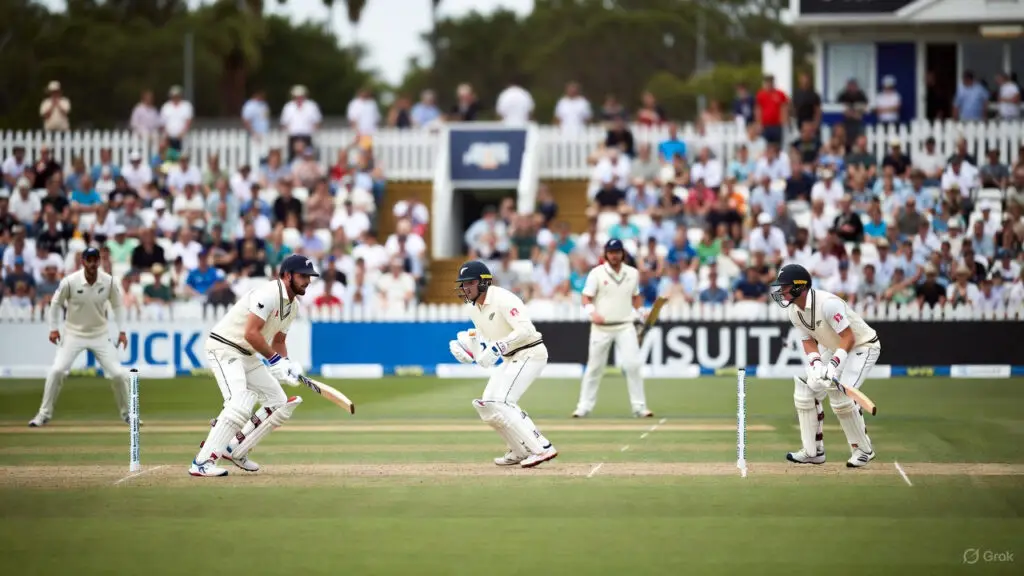
A unique, in-depth post-match analysis of the NZ vs WI 1st test Day 1 drama at Hagley Oval. We dissect how the West Indies pace quartet executed a bowling masterclass, reducing the home side to 231/9 despite Kane Williamson’s return and crucial 52.
The narrative of Day 1 of the first Test between New Zealand and West Indies—the NZ vs WI 1st test Day 1—was not one of a routine home victory but a dramatic, seismic shift orchestrated by the often-underestimated West Indies pace attack. At Hagley Oval, in conditions that perfectly mirrored a Caribbean seamer’s dream, the visitors, led by the astute Roston Chase, delivered a clinical and often devastating bowling performance. New Zealand finished the day at a precarious 231/9 after 70 overs, a score that felt more like a rescue operation than a commanding total.
The Tactical Verdict: West Indies Ace the Pitch Reading
West Indies won the toss and rightly elected to bowl on a green-tinged, overcast pitch. Their strategy was impeccable: Relentless pressure over sheer speed.
The genius of the day lay not in one superstar performance, but in the collective discipline of the seam quartet: Kemar Roach, Justin Greaves, Jayden Seales, and debutant Ojay Shields. They hunted as a true pack, recognizing that the length (the four-to-six-meter mark) on this surface was more dangerous than speed. They consistently forced the New Zealand batters to play outside the off-stump, a stark contrast to the occasional inconsistency that plagues many touring sides.
Result on Day 1: New Zealand finished on 231/9 (70 overs). The West Indies’ exceptional performance with the ball earns them a decisive advantage heading into Day 2.
Turning Points: The Collapse After the Calm
The defining period of the NZ vs WI 1st test Day 1 was the double blow just before the new ball was due, shattering New Zealand’s only period of sustained stability:
- The Veteran’s Opening Statement (1/1): The tone was set on the third ball of the match when the veteran Kemar Roach secured the immediate wicket of Devon Conway for a duck. This early dismissal psychologically cemented the Windies’ decision to bowl and affirmed the difficulty of the pitch.
- The Greaves Masterstroke (94/1 to 103/4): After a gritty 93-run stand between Kane Williamson and Tom Latham, the breakthrough came via Justin Greaves. He prized out the returning great, Kane Williamson (52), triggering a collapse that saw New Zealand lose three crucial wickets for just nine runs. Greaves removed Williamson and Latham in quick succession, proving to be the catalyst that exposed the Black Caps’ middle order.
- The Lower Order’s Defiant Partnership (148/6 to 200/7): When the home side was staring down an embarrassing sub-180 total, the 52-run partnership between Michael Bracewell and Nathan Smith was a defiant rearguard action. This stand prevented a total rout and highlighted the value of Test match temperament in the lower order.
Player Performance Spotlight: The Pace Pack
The sharing of wickets across the West Indies attack was the most telling statistic, demonstrating true collective effort:
| Bowler | Wickets | Analysis |
| Kemar Roach | 2 | The general of the attack. His control and early strike provided the platform. |
| Justin Greaves | 2 | The mid-innings assassin, removing the two most important wickets: Williamson and Latham. |
| Ojay Shields | 2 | The debutant demonstrated genuine Test match pedigree, accounting for Blundell and the settled Bracewell. |
| Johann Layne | 1 | Also on debut, he chipped in with the important wicket of Will Young, keeping the pressure on. |
| Roston Chase | 1 | The captain’s spin broke the Bracewell-Smith stand, proving his tactical usefulness. |
New Zealand’s Rescuers
- Kane Williamson (52 runs): Making his red-ball return, Williamson’s innings was a testament to his sheer will. He was visibly rusty, playing and missing often, and even surviving a no-ball dismissal scare. Yet, his ability to grind out a half-century on a minefield pitch was the difference between 150 all out and 231/9.
- Michael Bracewell (47 runs): Played a counter-attacking innings that provided New Zealand’s only real momentum in the final session, injecting necessary resistance when all seemed lost.
WTC Implications: A Crucial Win for West Indies’ Reset
This is New Zealand’s first Test of the 2025-2027 World Test Championship cycle. Starting with a weak first-innings total places immediate pressure on their potent, but now challenged, bowling attack.
For the West Indies, who have struggled to gain footing in the WTC, this performance is far more than points—it’s a massive confidence injection. If they can convert this Day 1 lead into a solid first-innings total, they immediately put the much-fancied Black Caps under immense pressure at home. This type of bowling dominance is the blueprint for how a touring side beats New Zealand.
Fan Perspectives: A Return to Classic Test Cricket
The overwhelming sentiment from the global fan base was sheer satisfaction at seeing an unheralded West Indies side compete fiercely. Many noted that this was a return to “classic Test cricket,” where the new ball and the seamer’s craft, rather than brute force hitting, dictated the pace of the day. There is an expectation that Day 2 will be a similarly low-scoring, high-tension affair.
Tournament Streaming Guide (Global Broadcasters)
To catch all the action from Day 2 and the rest of the series, here is where you can stream the tournament:
| Region | Broadcaster/Platform |
| New Zealand | Sky Sport NZ |
| India | Sony Sports Network, SonyLIV, FanCode |
| Australia | Fox Sports, Kayo Sports |
| United Kingdom (UK) | TNT Sports |
| United States (USA) | ESPN+ |
| Pakistan | Tapmad |