In the high-octane drama of an Ashes series, the headlines are usually predictable: England’s “Bazball” aggression vs. Australia’s pace dominance. But during the First Test of the 2025/26 series at Optus Stadium, the most important story wasn’t on the scoreboard. It was on the team sheet.
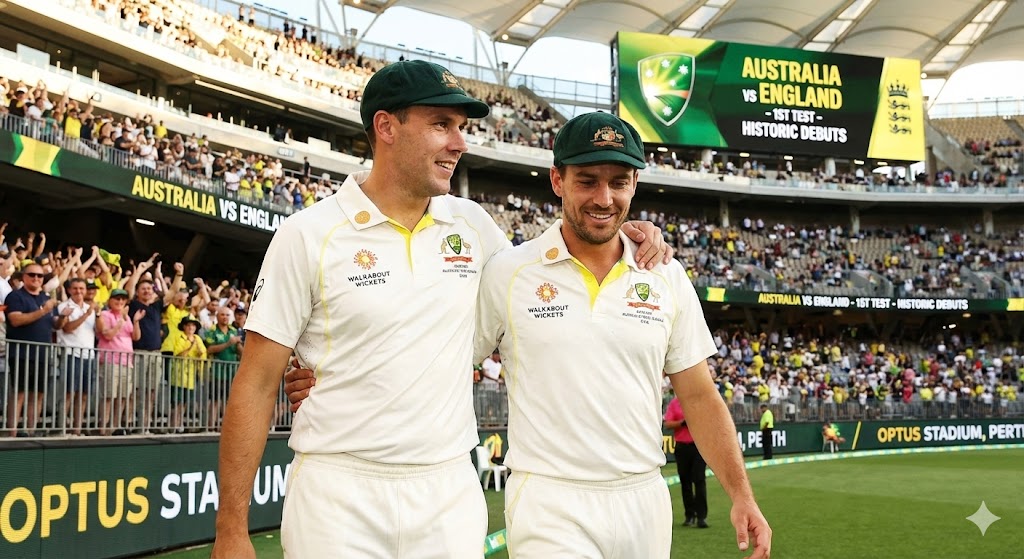
For the first time in the 148-year history of Australian Test cricket, two Indigenous players—Scott Boland and debutant Brendan Doggett—took the field in the same Playing XI.
It was a quiet milestone that spoke volumes. While injuries to Pat Cummins and Josh Hazlewood forced the changes, the resulting lineup shattered a century-and-a-half-long ceiling. Here is why this moment matters more than any wicket taken that day.
The Long Wait: Breaking the “One at a Time” Curse
To understand the weight of this moment, you have to look at the numbers. They are stark.
Before this match, only four Indigenous men had ever worn the Baggy Green in the history of the sport:
- Faith Thomas (First Indigenous cricketer to play for Australia)
- Jason Gillespie
- Ashleigh Gardner
- Scott Boland
For decades, the representation of First Nations people in Australian cricket was solitary. When Jason Gillespie was tearing through batting lineups in the 90s and 2000s, he was the sole representative. When Scott Boland burst onto the scene with his heroics at the MCG in 2021, he stood alone.
The selection of Boland (Gulidjan people) alongside Doggett (Worimi people) marked the end of the “one at a time” era. It proved that Indigenous excellence in cricket isn’t an anomaly—it is a deepening pool of talent.
Why It Happened: The Depth of the Fast Bowling Cartel
While the moment was symbolic, it was earned on merit.
Brendan Doggett didn’t get his Baggy Green as a token gesture; he earned it through years of grinding in the Sheffield Shield. Known for his raw pace and ability to hit the deck hard, Doggett has long been on the radar of selectors.
When the “Big Three” (Cummins, Starc, Hazlewood) were finally sidelined by the brutal schedule, Australia didn’t look to a traditional replacement. They looked to the form bowlers. That the two best options happened to be Indigenous men highlights the success of Cricket Australia’s recent pathways programs, designed to identify talent in remote and First Nations communities.
The “Boland Effect” on the Next Generation
Scott Boland has already spoken about the significance of this partnership. In interviews leading up to the match, he noted that seeing two Indigenous faces on the TV screen sends a powerful message to kids in the Northern Territory or regional New South Wales: “You belong here, and you don’t have to be the only one.”
We have seen this “visual impact” work before. The rise of Ashleigh Gardner in the women’s game has correlated with a spike in Indigenous female participation. The Boland-Doggett partnership is likely to have the same effect on young male fast bowlers.
Conclusion: A New Normal?
The 2025 Perth Test will be remembered for many things, but in the history books, the scorecard will be secondary to the team list.
Breaking a 148-year drought is a moment of celebration, but the ultimate goal is for this to stop being a headline. The hope is that in five years, seeing two, three, or four Indigenous players in an Australian squad won’t be “historic”—it will just be normal.
Until then, we celebrate the moment the barrier finally fell.
FAQs
Who was the first Indigenous male cricketer to play for Australia? Jason Gillespie was the first Indigenous male to play a Test match for Australia. However, Faith Thomas was the first Indigenous cricketer overall, playing for the women’s team in 1958.
What is Scott Boland’s Indigenous heritage? Scott Boland is from the Gulidjan people of the Colac area in Victoria.