Matches between India and Pakistan, even at the ‘A’ level, are always charged with tension. But a recent encounter produced a moment of controversy that has spilled over from the field into a global debate on the laws of cricket.
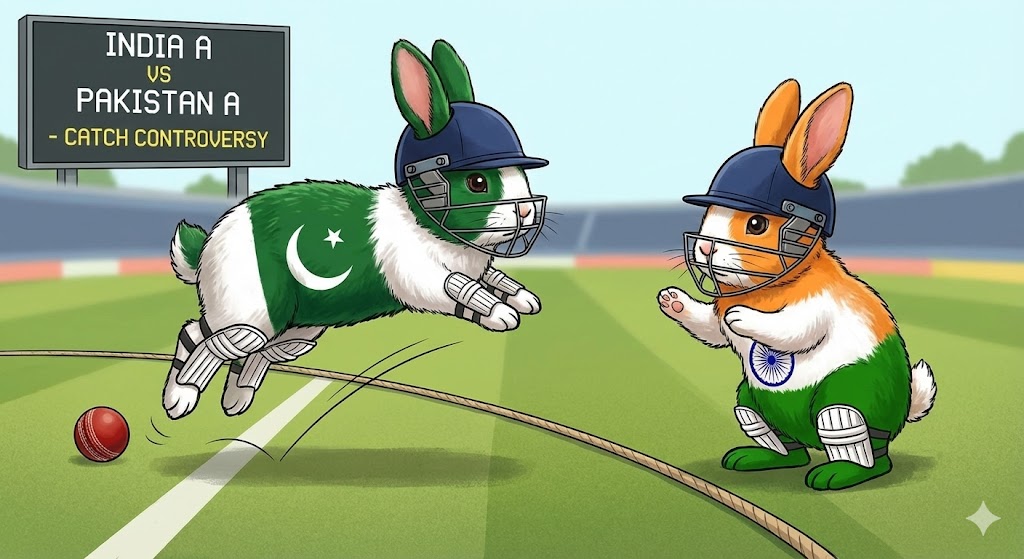
The incident, now dubbed the “Bunny Hop” Catch Controversy, centers on a spectacular piece of fielding on the boundary line. What looked like a miraculous relay catch was overturned by the third umpire, leading to furious protests from the Indian side.
This incident illustrates the Bunny Hop Catch Controversy that has sparked debates among cricket enthusiasts worldwide.
The Bunny Hop Catch Controversy raises questions about the rules and interpretations that govern cricket.
Coverage of the Bunny Hop Catch Controversy has been extensive across various media platforms. This pivotal moment in the match is a perfect example of the Bunny Hop Catch Controversy that can occur in high-stakes games. Was it a brilliant piece of athleticism or a clear violation of the rules? Here is a deep dive into the moment that has divided the cricket world.
Don’t have a streaming device yet? Here are the best options for watching cricket:
Fire TV Stick 4K
Roku Streaming Stick
Google TV Streamer 4K (Google Chromecast)
NVIDIA SHIELD Android TV Pro Streaming Media Player
The Incident: A Relay Throw from Beyond the Ropes
The moment of contention occurred at a crucial juncture in the match. A Pakistani batter lofted the ball high towards the boundary, where an Indian fielder was stationed.
What happened next is the source of the entire debate:
- The fielder, realizing momentum was carrying him over the rope, jumped backwards from beyond the boundary line.
- While airborne over the field of play, he tapped the ball back in.
- He then landed outside the boundary, and a teammate completed the catch inside the playing area.
To the naked eye, it appeared to be a perfectly executed relay catch, a skill that has become common in modern T20 cricket.
Such controversies, including the Bunny Hop Catch Controversy, can shift the momentum of a match dramatically.
The Bunny Hop Catch Controversy has led to significant discussions among players and fans alike.
The Controversy: The Third Umpire’s “Not Out” Ruling
The on-field umpires referred the decision upstairs, and the verdict stunned the Indian team: Not Out.
Critics argue that the Bunny Hop Catch Controversy exemplifies the need for clearer rules in cricket.
The third umpire’s interpretation hinged on a specific technicality regarding fielders who are grounded beyond the boundary. The ruling suggested that because the fielder’s last point of contact with the ground before touching the ball was outside the rope, his subsequent airborne touch was deemed to be out of bounds.
This interpretation led to immediate and heated arguments on the field. The Indian captain was seen in an animated discussion with the umpires, passionately accusing them of misinterpreting the “airborne fielder” rule and robbing his team of a legitimate wicket.
Click Here to Learn How to Watch SA20 in USA
Analyzing the “Airborne Fielder” Rule
This controversy highlights a complex and often misunderstood area of the MCC Laws of Cricket.
The debate revolves around when a fielder is considered to have “grounded” themselves. The traditional understanding is that if a fielder jumps from inside the boundary, they can touch the ball while airborne over the boundary line, provided they don’t touch the ground outside.
However, this “Bunny Hop” scenario is different. The fielder started their jump from outside the field of play. The umpire’s interpretation suggests that you cannot re-establish yourself as “in play” simply by being airborne; your last contact with the ground matters.
As the Bunny Hop Catch Controversy unfolds, cricket fans are left questioning the integrity of the game.
Many are calling for a review of the Bunny Hop Catch Controversy to ensure fair play and clarity.
This ruling sets a potentially massive precedent. If this interpretation holds, it could invalidate many spectacular boundary catches that fans and players currently believe to be legal.
The implications of the Bunny Hop Catch Controversy could resonate beyond just this match.
This type of ruling is precisely what led to the Bunny Hop Catch Controversy that has everyone talking.
Understanding the Bunny Hop Catch Controversy is essential for cricket fans to appreciate the nuances of the game.
As discussions continue, the Bunny Hop Catch Controversy provides a rich topic for analysis.
Conclusion: A Gray Area in Black and White Rules
While the match is over, the debate over the “Bunny Hop” catch controversy is far from settled.
It serves as a stark reminder that even in an era of high-definition replays, the laws of cricket contain gray areas open to interpretation. For the Indian A team, it was a bitter pill to swallow in a high-stakes match. For the rest of the cricket world, it’s a confusing new precedent that needs immediate clarification from the ICC and MCC.
FAQs about the Controversy
What is a “relay catch” in cricket? A relay catch occurs when a fielder near the boundary taps or throws the ball back into the field of play to a teammate before their own body touches the ground outside the rope.
Why was the catch given Not Out? The third umpire ruled that because the fielder jumped from outside the boundary line, their touch on the ball was considered out of bounds, regardless of them being airborne at the time.
Did the Indian team protest the decision? Yes, the Indian A captain was seen in a heated argument with the on-field umpires immediately after the decision was announced on the big screen.